
Termite Treatment Before Construction Cost in India (2026): Rates, IS 6313 Stages and What to Check on Site
Termite treatment before construction in India costs ₹2.5–15 per sq ft in 2026. IS 6313 stages, chemicals, warranty and site checks.
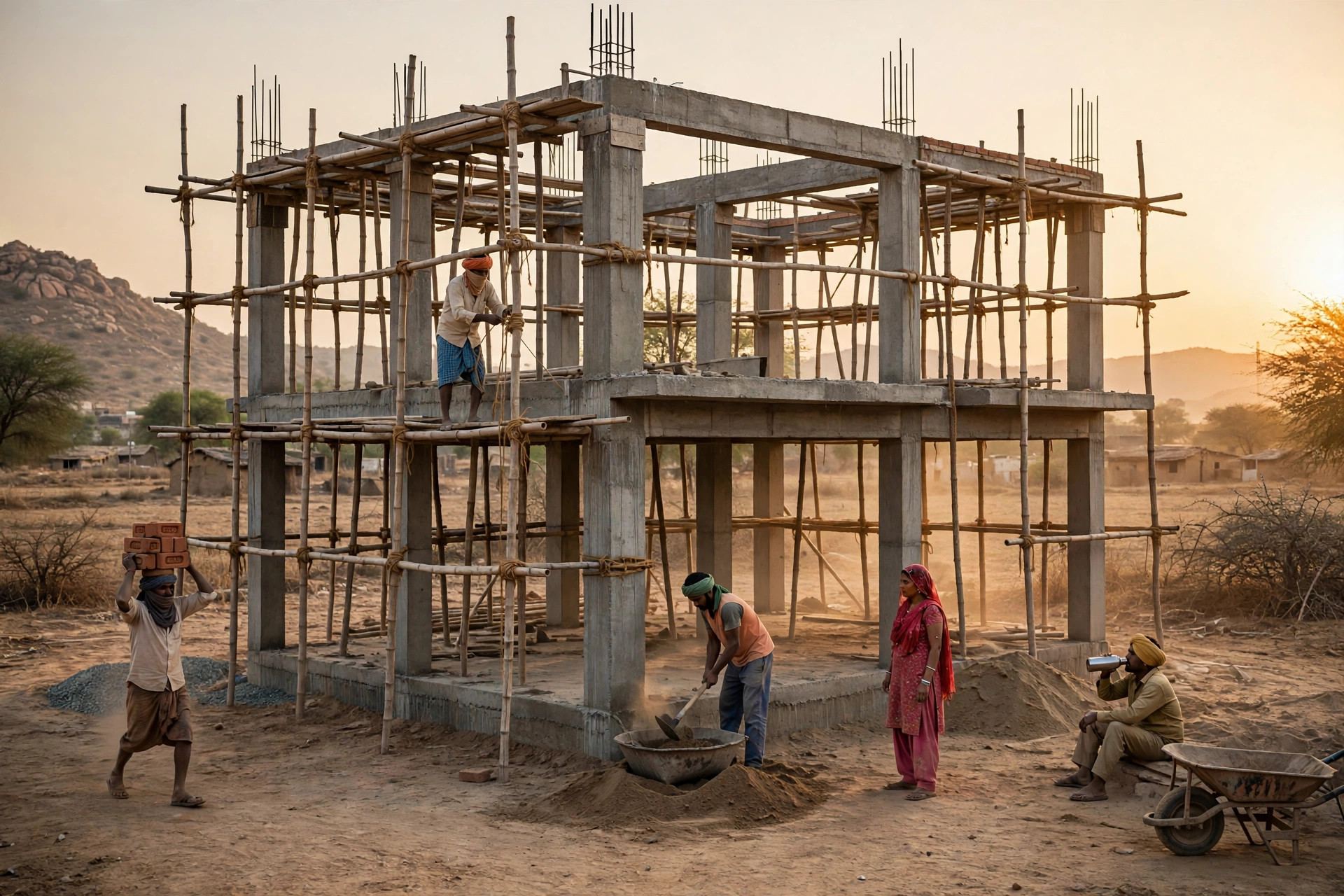
Termite treatment before construction is the cheapest insurance a new house in India can buy — and the easiest line item to lose in the foundation budget. It costs a few thousand rupees on a house worth lakhs, it takes four or five short site visits spread across the foundation work, and once the floor slab is down it can never be done properly again. Yet it is routinely skipped, quoted as a single vague figure, or done as one sprayed layer instead of the five stages the Indian Standard requires. This guide covers termite treatment before construction cost in India — the 2026 per-square-foot rates, the IS 6313 stages and dosages, the chemicals actually used, the warranty to ask for, and the on-site checks that stop a skipped stage from becoming a hollow door frame five years later.
Short answer: In 2026, basic pre-construction soil treatment in India costs ₹2.5–6 per sq ft of plinth area, so a 1,000 sq ft house runs about ₹2,500–6,000, before most companies' ₹5,000–8,000 minimum charge. A full IS 6313 protocol with a 10-year warranty is quoted at ₹8–15 per sq ft, and a refillable reticulation piping system at ₹6–10 per sq ft. The work follows IS 6313 Part 2 in five stages — foundation pits, backfill, plinth fill, wall-floor junctions and the external perimeter — using chlorpyrifos 20% EC at a 1% emulsion or imidacloprid 30.5% SC at 0.075%. No published Ajmer-only rate card exists, so judge an Ajmer quote against the national bands, toward their lower half for a tier-2 city.
Termite treatment before construction cost in India: the 2026 rates
Pre-construction treatment is priced per square foot of plinth area — the built-up footprint of the house, not the plot size — and the rate depends on what the quote actually includes. That is why published 2026 guides disagree: they are pricing different scopes. The table below keeps the scopes separate so the numbers can be compared honestly.
| Scope quoted | Typical 2026 rate | What it includes |
|---|---|---|
| Basic soil treatment (IS 6313 stages, standard chemical) | ₹2.5–6 per sq ft of plinth area | Five-stage soil treatment with chlorpyrifos or imidacloprid emulsion |
| Full IS 6313 protocol with 10-year warranty | ₹8–15 per sq ft of built-up area | All five stages, documented dosages, written 10-year warranty |
| Broader market range (some providers, premium chemicals) | ₹8–25 per sq ft of plinth area | Full protocol with premium non-repellent chemicals and longer warranty terms |
| Reticulation piping system (pre-construction only) | ₹6–10 per sq ft of plinth area | Perforated pipe network under the slab plus the chemical fill, refillable later |
| Post-construction drilling and injection (for comparison) | ₹4–12 per sq ft of built-up area | Drilling through finished floors and injecting termiticide |
The worked totals make the scale obvious. At the basic soil-treatment rate, a 1,000 sq ft house costs ₹2,500–6,000; a 1,500 sq ft house ₹3,750–9,000; a 2,000 sq ft house ₹5,000–12,000; and a 3,000 sq ft house ₹7,500–18,000. At the full-protocol rate of ₹8–15 per sq ft, the same 1,000 sq ft house costs ₹8,000–15,000 — once, with a 10-year warranty. Either way, the treatment is a fraction of one per cent of the construction cost: on a house built at ₹2,000–3,000 per sq ft, the full protocol adds roughly ₹8–15 to a per-square-foot build cost of ₹2,000 or more.
Two pricing facts matter when you compare quotes. First, most companies set a minimum charge, often ₹5,000–8,000, because the work needs four or five site visits whatever the plot size — so a small 800 sq ft house will usually be billed at the minimum, not at the per-square-foot rate. Second, the rate per square foot usually falls as the area grows, because setup and travel are spread over more work. And geography moves the rate: metros price 10–20% above tier-2 cities for the same scope, while smaller towns are often 15–25% lower. An Ajmer quote should sit toward the lower half of the national bands — but confirm it in writing, because no published Ajmer-only rate card exists to check it against.
The cheapest comparison is the one that matters most. Pre-construction treatment is five to ten times cheaper per square foot over a building's life than post-construction work, because the technician has open access to soil and foundation and does not need to drill through finished floors and tiles. A homeowner who skips a ₹6,000 treatment to save money is buying a ₹25,000-plus drilling job later — and a weaker result.
The five IS 6313 stages, in the order they happen on site
IS 6313 is the Bureau of Indian Standards code for anti-termite measures in buildings. Part 1 covers constructional measures, Part 2 covers pre-construction chemical treatment of the soil, and Part 3 covers treatment of existing buildings. The pre-construction work follows five stages, applied as construction proceeds, so the chemical barrier is continuous — the whole point, since termites need only one untreated gap to reach the structure.
| Stage | When it happens | Where the chemical goes | Dosage (emulsion) |
|---|---|---|---|
| 1. Foundation pits and trenches | After excavation, before any concrete | Bottom and sides of every pit and trench | 5 litres per sq m of surface |
| 2. Backfill against foundations | As earth is returned around the foundation | Vertical surface of foundation walls, in a 300 mm strip as fill goes back | 7.5 litres per linear m per 300 mm depth |
| 3. Plinth fill top surface | After fill is levelled, before the floor slab or PCC | Top surface of the consolidated fill inside the plinth walls | 5 litres per sq m |
| 4. Wall-floor junction | Just before flooring is laid | Strip around columns and load-bearing walls at floor level; rod holes 150 mm deep at 150 mm centres | 0.6 litres per linear m of junction (some guides: 7.5 litres per sq m at the junction) |
| 5. External perimeter apron | After the apron is built | Soil along the external perimeter; trench about 300 mm deep beside the wall | 5 litres per sq m of vertical surface, plus 7.5 litres per linear m of trench |
A few practical points from the guides. Stage 1 must be applied immediately before concreting — within an hour or two — because sun and wind dry the chemical off the exposed soil. Treatment should not be carried out when it is raining or the soil is wet with subsoil water. And once treated, the soil barrier must not be disturbed: if a later excavation cuts through it, that section needs re-treatment. Stages 4 and 5 are the ones most often skipped, because by then the house looks nearly finished and the treatment is invisible — which is exactly why they matter. A barrier with a gap at the wall-floor junction is a barrier with a door in it.
A YouTube conversation with entomology expert Ravi Vyas, who has worked in termite control for over 39 years, makes the same point from the biology side: the protection only works as a continuous, uniform chemical barrier, with the soil treated at multiple depths. Termites can penetrate through the aggregates used in construction, and a foot-deep sand barrier on its own does not stop them. Moisture and humidity are what draw termites in, so the dampest parts of a house — the plinth, the bathroom walls, the soil against the foundation — are where the barrier has to be unbroken. That is why the code treats the soil in stages rather than in one pass: each stage closes a different entry route.
Which chemical, and at what strength
The chemicals are not a matter of brand preference. The code and the Central Insecticides Board & Registration Committee (CIB&RC) list the approved termiticides, and the two workhorses are:
- Chlorpyrifos 20% EC at 1% emulsion — the industry standard since the late 1990s. One litre of concentrate mixed with 19 litres of water makes 20 litres of 1% emulsion. It is an organophosphate, a repellent type: termites detect it and avoid the treated soil.
- Imidacloprid 30.5% SC at 0.075% emulsion — the other code-listed option, used at a much lower concentration.
The biggest shift in recent years, described by Indian pest-control guides, is toward non-repellent termiticides — chemicals termites cannot detect and do not avoid, so they walk through the barrier, pick the chemical up, and carry it back to the colony through grooming and contact. The two dominant non-repellents in India today are fipronil and imidacloprid, both CIB-approved. They cost more, which is part of why full-protocol quotes reach ₹8–25 per sq ft while basic chlorpyrifos work sits at ₹2.5–6.
Whatever chemical the quote names, check two things: that it is on the current CIB&RC approved list (the chemical annex in older editions of IS 6313 is outdated), and that the emulsion is mixed on site in front of you, in graduated containers, at the stated dilution. A very low quote often means diluted chemical or skipped layers — the two shortcuts that leave a house looking treated and actually unprotected. Ask the contractor to leave the empty concentrate containers with you; it is the simplest proof of what went into the soil.
The reticulation piping option: pay more now, refill later
One pre-construction-only option is worth knowing about before the slab goes down, because it cannot be installed afterwards: a reticulation (piping) system. Perforated HDPE pipes are laid in a grid along the building perimeter and beneath the slab before the concrete is poured, and approved termiticide is pumped through the network, soaking the soil and creating the chemical barrier. The pipes conform to IS 17425, the Indian standard for anti-termite reticulation pipes.
The cost is typically ₹6–10 per sq ft of plinth area for the piping plus the chemical fill, though some providers quote as wide as ₹8–25 per sq ft depending on the pipe layout and warranty. The point of the system is not the first fill — it is the refills. The treatment chemicals degrade over time, and a piped system lets a company pump a fresh dose through the same network years later without breaking a single floor tile. On a large house, or one with expensive stone flooring, that is worth weighing against the basic soil treatment. On a small house with ordinary flooring, the basic five-stage treatment plus a written warranty is usually the better spend.
Pre-construction vs post-construction: the comparison that decides it
| Factor | Pre-construction | Post-construction |
|---|---|---|
| When it is done | During building, before floors are laid | After the house is finished and occupied |
| Method | Soil treatment in five stages under IS 6313 Part 2 | Drilling holes through floors and injecting termiticide |
| Typical 2026 cost | ₹2.5–6 per sq ft (basic) or ₹8–15 per sq ft (full protocol) | ₹4–12 per sq ft, or ₹6,000–25,000 for a typical flat or villa |
| Coverage | Every square foot beneath the building, including the middle of large rooms | Limited by where drilling can reach; centre of large rooms is hard to cover |
| Warranty | Commonly 10 years on a full protocol | Shorter, and usually excludes areas not drilled |
| Disruption | None — done during construction | Dust, drilled floors, sealing and re-polishing |
Done properly, pre-construction treatment gives better protection because it covers every square foot beneath the building, and it costs less per square foot because the soil is open and easy to treat. Post-construction treatment is the repair job, not the alternative.
How long it lasts, and what the warranty should say
The treatment is not permanent. The chemicals now used degrade with time, soil moisture and microbial action, so the barrier weakens year by year rather than failing on a fixed date. That is why the warranty matters more than the chemical brand: most reputable companies back a full IS 6313 protocol with a 10-year warranty, and that is the practical horizon to plan around.
Read the warranty before you pay. It should name the chemical and concentration, list the stages covered, state the warranty period, and spell out the exclusions — most warranties exclude damage from later structural alterations, plumbing leaks that wash the barrier out, and soil disturbance from later excavation. Some warranties are free re-treatment promises; others are repair-cost caps. Get the terms in writing, with the company's letterhead and the site address on it, and keep it with the house papers alongside the sanctioned plan. If the contractor will not put the warranty in writing, the treatment is not worth paying for.
Two habits extend the barrier's life. Keep the plinth and the soil against the foundation dry — fix leaking taps and downpipes promptly, and keep the ground sloping away from the walls. And do not stack firewood, cardboard or timber against the external walls, which gives termites a bridge over the treated perimeter and a food source within reach of the house. Our guide to soil testing before construction in Ajmer covers what the soil report tells you about the ground itself, and the same survey visit is the right time to ask about termite pressure on the plot — damp, organic-rich soil near old trees or a demolished structure is higher risk than dry, rocky ground.
Ajmer: what to expect on a local quote
Ajmer's hot, dry climate works in a homeowner's favour in one way and against them in another. Termites need moisture, so the driest months are quiet — but Ajmer houses still create the damp pockets termites need: the plinth, the bathroom and kitchen walls, the soil under a leaking overhead tank, and the shaded north side of the house. The treatment is just as necessary here as anywhere in India; the climate changes where termites attack, not whether they do.
On price, expect an Ajmer quote toward the lower half of the national bands. Published guides put smaller towns 15–25% below metro rates for the same scope, and Ajmer is a tier-2 city, so a basic soil treatment quoted at ₹2.5–4 per sq ft or a full protocol at ₹8–12 per sq ft would be in line — but no published Ajmer-only rate card exists, so treat those as a sanity check, not a fixed price. Get two quotes on the same written scope: same plinth area, same chemical and concentration, same five stages, same warranty. A quote that is half the other one is almost certainly a quote for fewer stages or a diluted emulsion, not a bargain.
The timing also matters for Ajmer builders. The five stages are spread across the foundation work, so the treatment has to be booked before excavation starts, not when the slab is about to be poured. Tell the structural engineer at the design stage — the foundation drawings are where the treatment stages get scheduled — and confirm the dates with the pest-control company against the construction programme. A treatment stage missed because nobody called the company in time cannot be redone without digging the foundation up again. Our guides to foundation types for black cotton soil and RCC frame structure lifespan in India cover the foundation decisions the treatment schedule hangs off, and our guide to house plan approval fees in Ajmer explains what the sanctioned drawings should show before work starts.
Mistakes that leave a house unprotected
Most termite failures in new houses are not chemistry failures; they are scheduling and supervision failures. The commonest: skipping the treatment entirely because the foundation budget was already tight; treating only the foundation pits and calling the job done; letting the contractor spray one stage and bill for five; disturbing treated soil with later excavation and never re-treating it; and treating in the rain, when the emulsion washes off before it soaks in. The failure rarely shows in the first year. It shows as hollow-sounding door frames, blistered paint near the skirting, and mud tubes on the plinth — usually three to five years after the house is finished, when the warranty argument is hardest to win.
The cheapest protection is the one done once, in five stages, with the emulsion mixed on site, the stages witnessed, and the warranty in writing. That means booking the company before excavation, being present for stages 1 and 3 at minimum, checking the dilution, and keeping the treated soil undisturbed until the slab is down. It also means budgeting the full ₹8,000–15,000 for a 1,000 sq ft house on a full protocol, not the ₹2,500 headline rate, and getting the warranty with the house papers. Before you commit, check the ground the house stands on and the budget it sits in: our guide to house construction cost in Ajmer treats the termite treatment as a separate line item for exactly this reason — it is too small to argue about and too expensive to skip.
Frequently Asked Questions
How much does termite treatment before construction cost in India?
In 2026, basic pre-construction soil treatment costs ₹2.5–6 per sq ft of plinth area, so a 1,000 sq ft house runs ₹2,500–6,000 before the minimum charge. A full IS 6313 protocol with a 10-year warranty is quoted at ₹8–15 per sq ft. Most companies set a minimum charge of ₹5,000–8,000 because the work needs four or five site visits.
What is IS 6313 Part 2 for termite treatment?
IS 6313 Part 2 is the Bureau of Indian Standards code for pre-construction chemical treatment against subterranean termites. It sets out five treatment stages — foundation pits, backfill, plinth fill, wall-floor junctions and the external perimeter — plus the approved chemicals and their dosages. Following it stage by stage creates one continuous chemical barrier under and around the house.
Which chemical is used for anti-termite treatment in India?
The standard is chlorpyrifos 20% EC diluted to a 1% emulsion — one litre of concentrate to 19 litres of water — applied at 5 litres per square metre on most stages. Imidacloprid 30.5% SC at 0.075% is the other code-listed option. Newer non-repellent termiticides such as fipronil are used, and every chemical must be on the CIB&RC approved list.
How long does pre-construction termite treatment last?
It is not permanent. The chemicals degrade over time with soil moisture and microbial action, so protection weakens year by year. Most reputable companies back a full IS 6313 protocol with a 10-year warranty. A reticulation piping system lets a company refill the barrier later without breaking floors, which is worth considering on larger homes.
Can termite treatment be done after construction?
Yes, but it is a different job. Post-construction treatment means drilling holes through finished floors and injecting termiticide, typically at ₹4–12 per sq ft. It cannot reach the middle of large rooms the way pre-construction soil treatment can, so treat it as damage control, not a substitute for treating the soil first.
What should I check before paying for termite treatment in Ajmer?
Ask for the chemical name and concentration, the IS 6313 stages covered, and the warranty in writing. Be present for the foundation-pit and plinth-fill stages, check the emulsion is mixed on site, and confirm the treated soil is left undisturbed. No published Ajmer-only rate card exists, so judge a quote against the national ₹2.5–15 per sq ft bands.
Book Site Consultation
Termite treatment is a small line item with an outsized consequence: it is the only part of the house that can never be redone properly once the slab is down. Book a site consultation and Design Plus will schedule the five IS 6313 stages against your foundation programme, check the contractor's chemical, concentration and warranty in writing, and give you an itemised estimate for the treatment — separately, in writing — before you commit to anything. Bring your plot papers and the sanctioned plan, and judge the studio on whether its numbers add up.
Planning a project in Ajmer?
Get a free site consultation with our architects — honest scope, transparent pricing, no obligation.
Book Free Site Consultation